


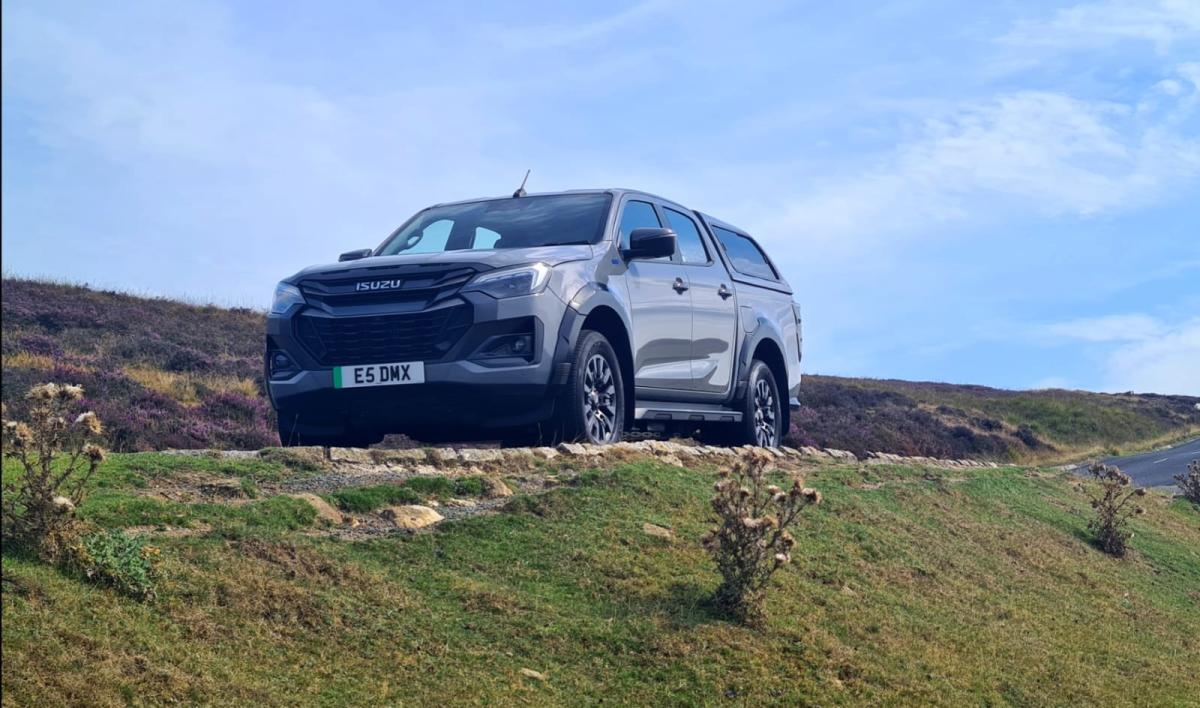
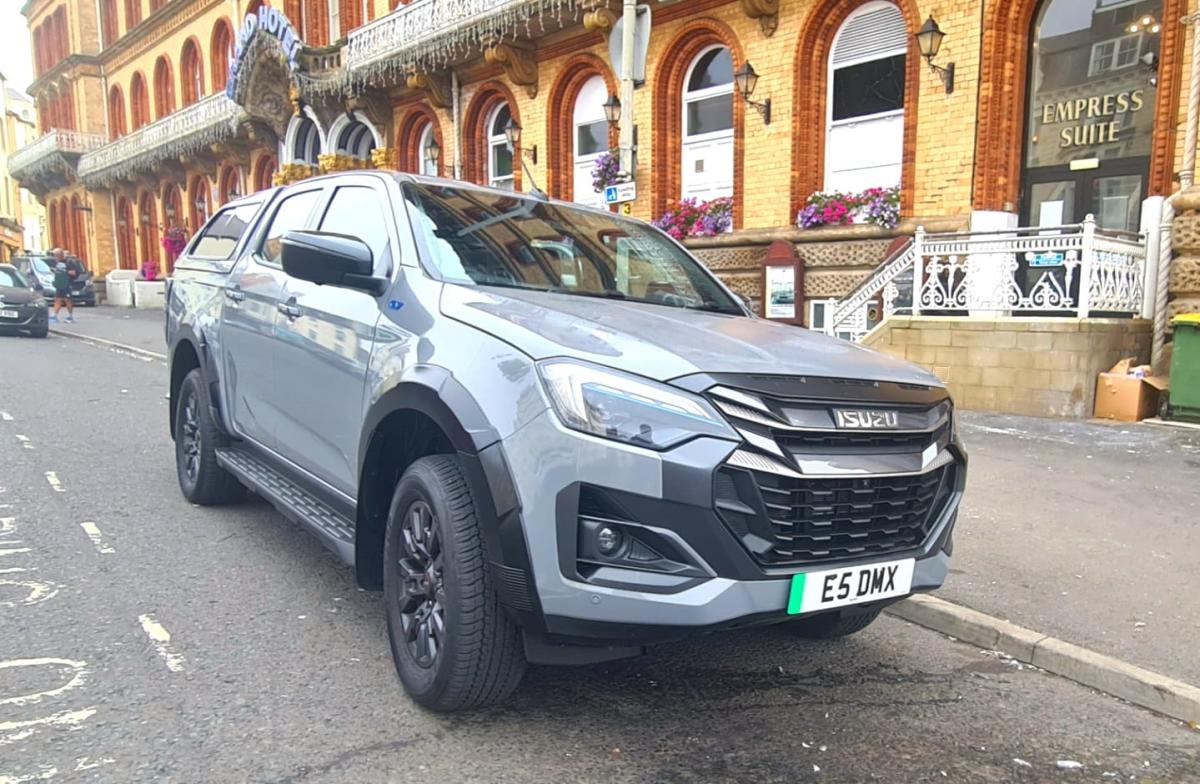
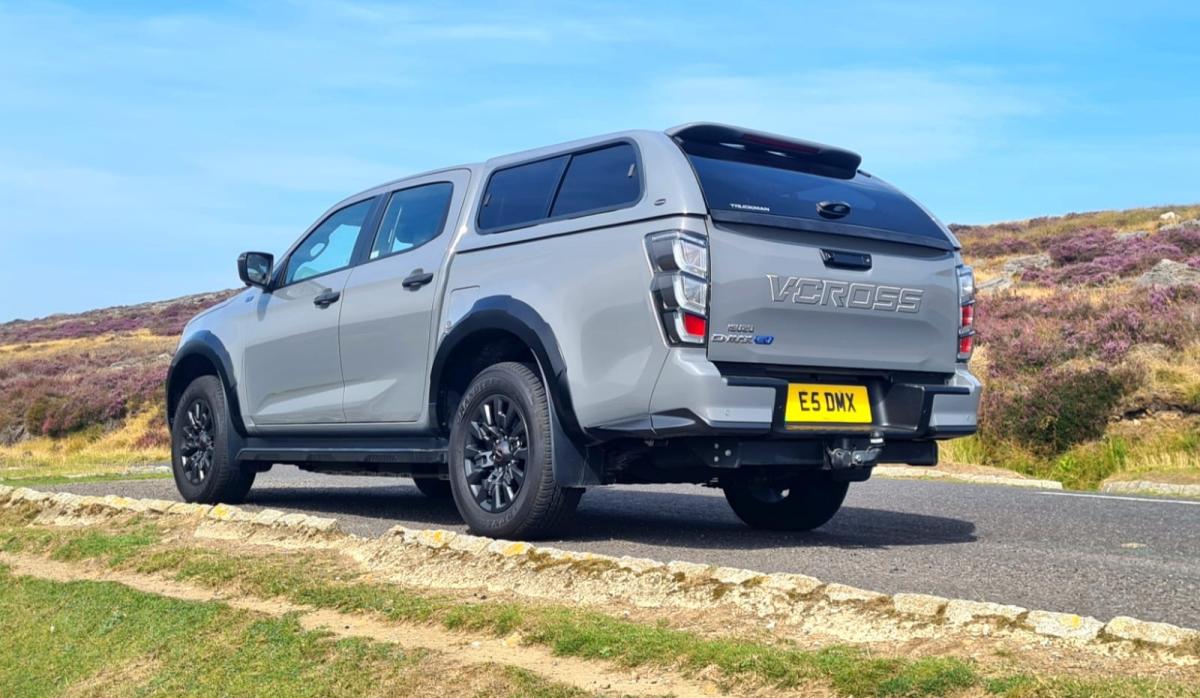
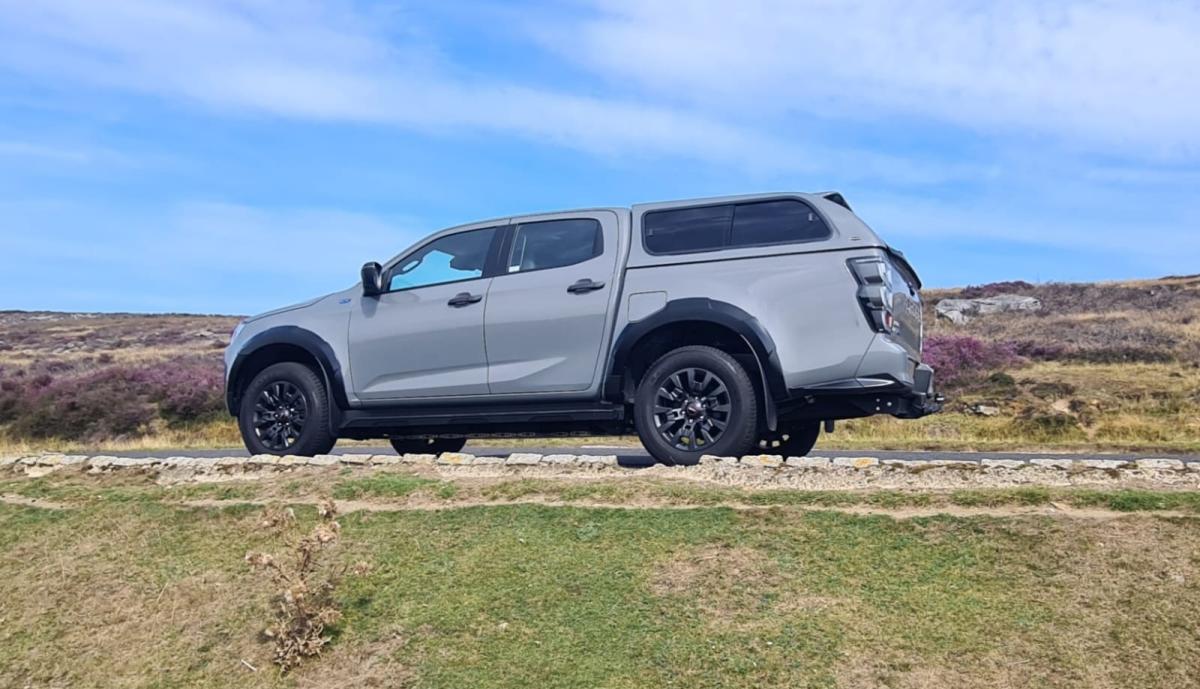

Arriving on the North York Moors in the Isuzu D‑Max EV feels oddly apt.
This is the landscape made famous by TV series 'Heartbeat', where the loveable rogue Claude Greengrass and his trusty 'Mandy Morris' truck became local institutions.
In these rural parts, a tough, no‑nonsense pick‑up has always been popular - and the diesel D‑Max has long been a familiar sight on farm tracks and village high streets alike.
The question now is whether an all‑electric D‑Max can win over the same crowd.

On paper, the EV version makes a strong case. It swaps the 1.9‑litre turbodiesel for dual electric motors - one on each axle - delivering 188 bhp and 240 lb ft of torque.
That’s enough for a 0–62 mph time of 10.1 seconds and a top speed of 84 mph, making it noticeably quicker than the diesel while remaining entirely silent.
For a vehicle aimed at farmers, tradespeople and fleets, the shift to electrification is less about thrills and more about practicality, running costs and compliance with tightening emissions rules.
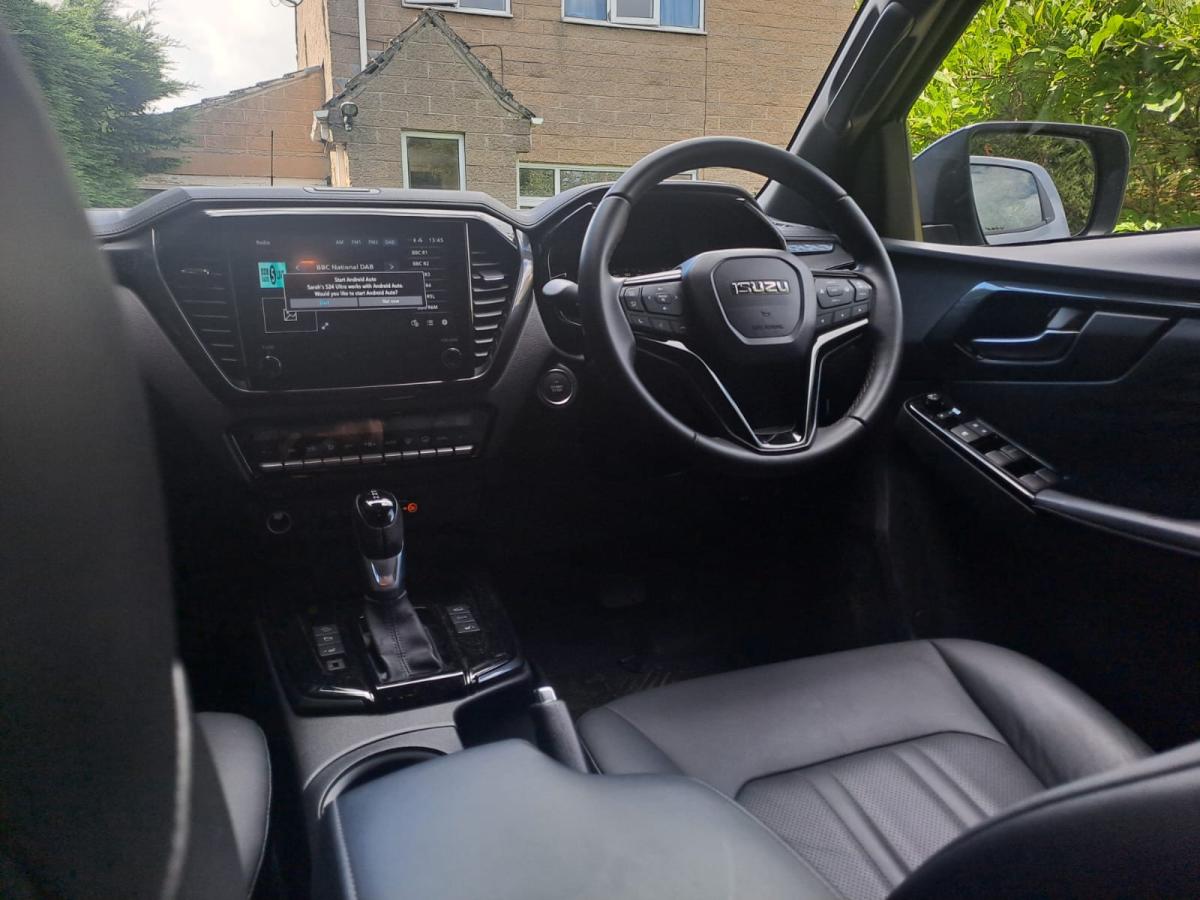
Climbing into the Double Cab eV‑Cross, the cabin feels reassuringly familiar.
There are heated seats wrapped in hard‑wearing leather, robust plastics that won’t flinch at muddy boots, and plenty of sockets to keep devices charged.
The biggest changes are subtle: paddle shifters behind the wheel let you adjust regenerative braking strength, and the rev counter is replaced by a power gauge showing energy flow.
An 8.0‑inch touchscreen and 7.0‑inch digital driver display look dated next to newer rivals, but wireless Apple CarPlay and Android Auto keep things usable.

Pulling away from the car park in Goathland - the very spot where Heartbeat’s fictional Aidensfield was filmed - the absence of engine noise is striking.
Claude Greengrass, the ducker and diver with an ear for opportunity, might not have recognised this hushed approach.
But he would likely have approved: he always liked a new scheme, especially one that cut costs.
And on that front, the D‑Max EV has appeal. As a company vehicle, it benefits from far lower benefit‑in‑kind tax rates than a diesel double‑cab, turning a high list price into a compelling proposition for business users.
Out on the moorland roads, the EV’s permanent four‑wheel drive and instant torque make it easy to place.
It doesn’t handle like an SUV - there’s plenty of lean in corners and a fidgety ride at low speeds - but body control is reasonable and grip is strong.
The silent powertrain is a welcome change from the clattery diesel, and while 188bhp isn’t abundant, it’s sufficient for steady progress up steep, winding lanes.

Where the D‑Max EV truly shines is in its core brief: utility.
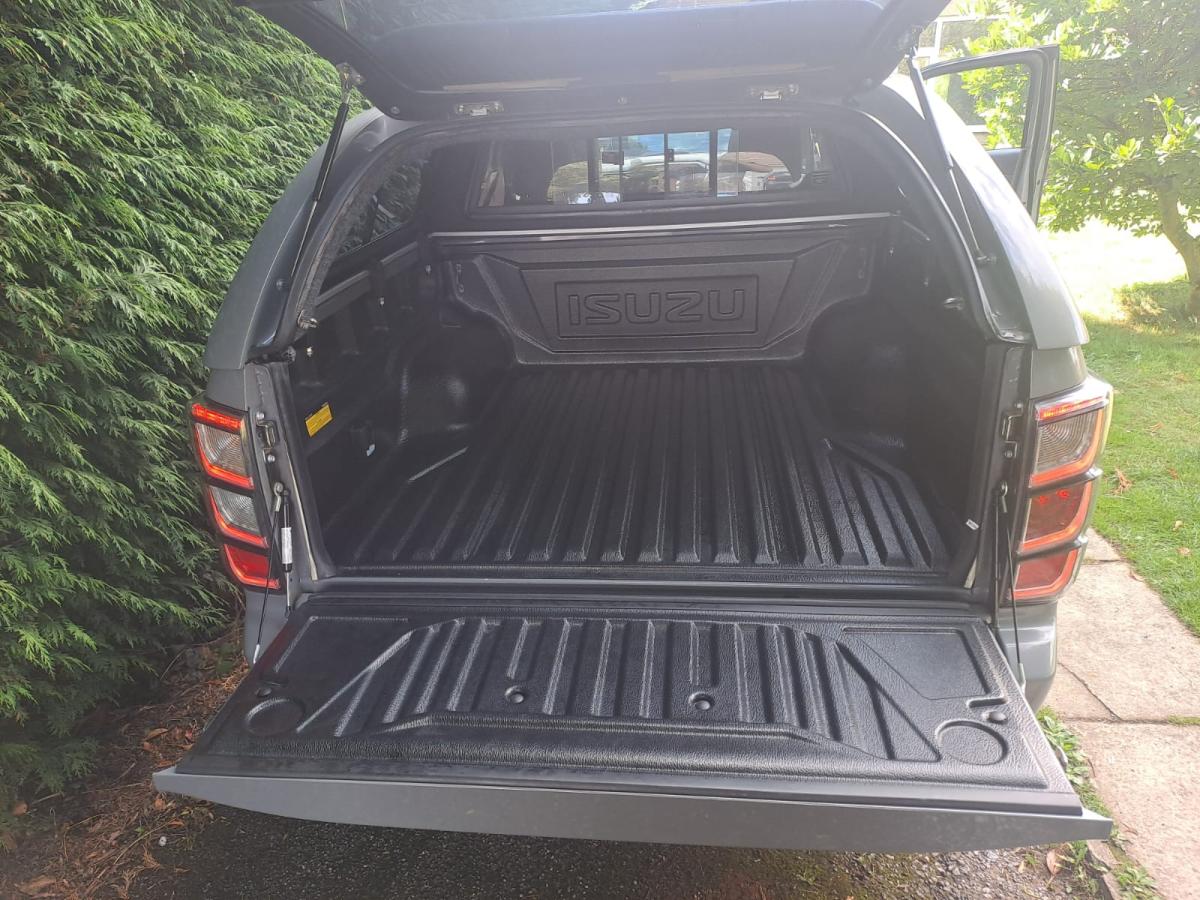
Payload and braked towing remain identical to the diesel at 1,000 kg and 3,500 kg respectively, figures that lead the electric pick‑up class.
Ground clearance is 210mm and wading depth 600mm, slightly down from the diesel’s 230mm and 800mm, but approach and departure angles (30.5° and 24.2°) are unchanged.
Add a dedicated Rough Terrain Mode and a strengthened ladder chassis, and the EV remains a credible off‑roader - even if we’ve yet to test it to its limits in the mud and heather.

Range is the obvious compromise. In a part of the world not renowned for being overun with public charging points, I had to plan my journeys wisely.
The 66.9 kWh battery delivers a WLTP combined figure of 163 miles, edging out the estimated 159 miles for Toyota’s upcoming Hilux EV but still modest for long days on the road.
DC charging peaks at a slow 50 kW, though 11 kW three‑phase AC charging is standard, allowing a full top‑up in around six hours.
For farms and depots with on‑site chargers, that’s workable; for lone operators covering wide areas, it demands planning.
And as with all electric workhorses, hauling maximum payload or towing will cut into that range further.

Back in the Moors’ stone‑walled lanes, it’s easy to imagine the diesel D‑Max earning its keep here for years to come.
But the EV version makes a convincing case for the future: quiet, clean, and still tough enough for the job.
In these parts, where practicality trumps prestige, the D‑Max EV could prove just the new scheme a rural business needs.
The Isuzu D-Max EV has a list price of about £60,000. Commercial buyers will be able to reclaim whatever tax you pay on top, because it has a payload greater than one tonne.
However, for private buyers, it's not a cheap option - and buyers such as Claude Greengrass would have been looking to haggle on the price.
POWERTRAIN: dual electric motors (front and rear)
DRIVE: permanent four-wheel drive (4wd)
BATTERY CAPACITY: 66.9kwh lithium-ion
POWER: 188bhp
TORQUE: 240lb ft (325nm)
0-62MPH: 10.1 seconds
TOP SPEED: 84mph
RANGE: 163 miles (wltp)
DC CHARGING: up to 50kw
AC CHARGING: up to 11kw three-phase
AC CHARGE TIME (0-100%): approximately 6 hours
PAYLOAD: 1,000kg
TOWING CAPACITY: 3,500kg (braked)
GROUND CLEARANCE: 210mm
WADING DEPTH: 600mm
APPROACH ANGLE: 30.5 degrees
DEPARTURE ANGLE: 24.2 degrees
PRICE: from £59,995 + vat
MODEL TESTED: Isuzu d-max ev eV-cross double cab


Share